
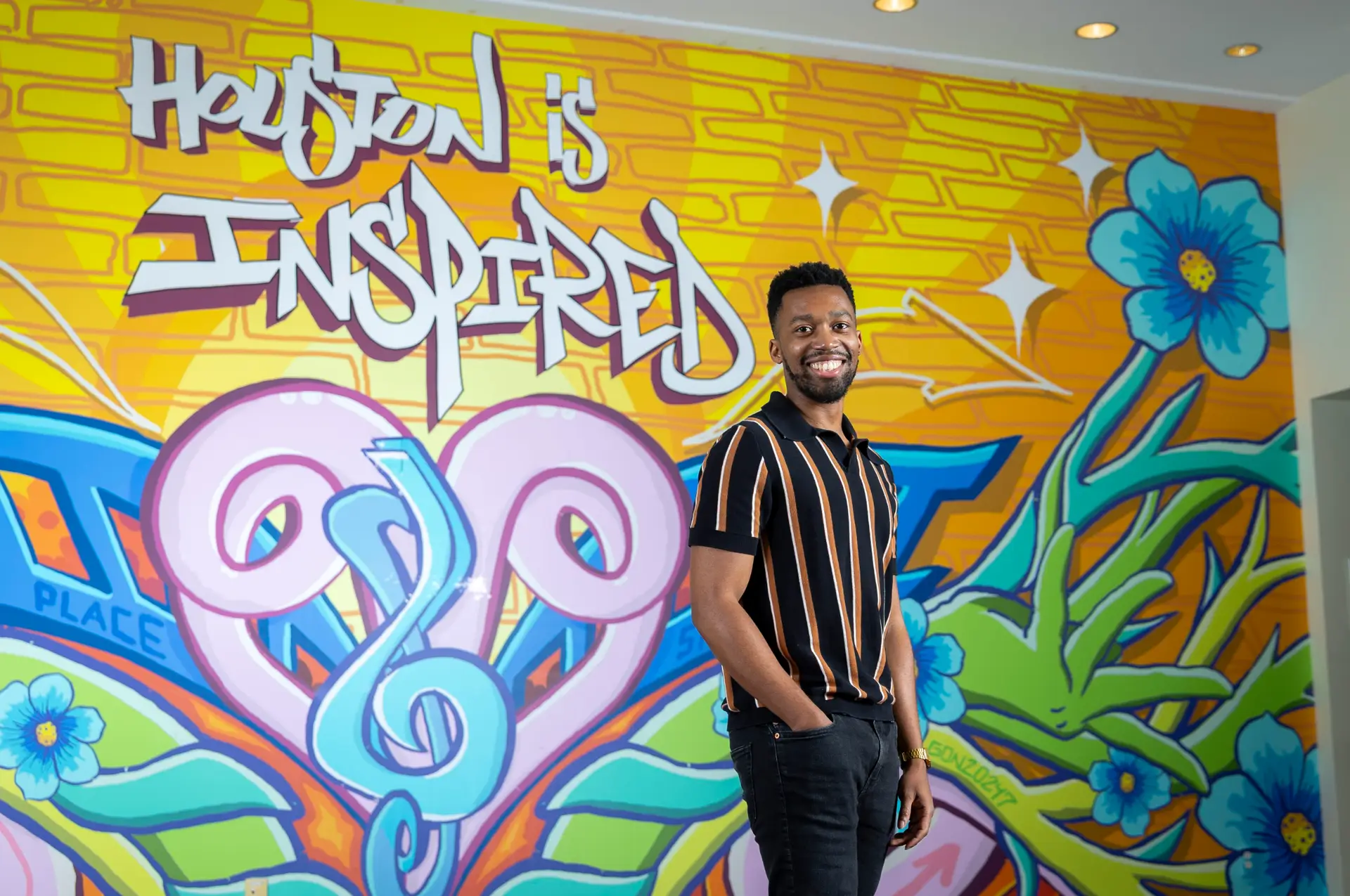
When I spoke with Jalen Baker, he was in Italy, surrounded by buildings that had been standing for hundreds of years. Seeing those structures made him think about Houston, where historic buildings are often demolished to make way for new developments.
Baker is a fourth-generation Third Ward resident who has witnessed the transformation of Houston’s most historically significant Black neighborhoods.
He pointed to Antioch Missionary Baptist Church, founded in 1866, which now stands surrounded by downtown skyscrapers. The church has survived, but he wonders about the buildings, businesses, and gathering places that haven’t.
“I often wonder what was there before,” he told me.
That question became a driving force behind his latest album, RePaved, a jazz project inspired by the history of Houston’s Third, Fourth, and Fifth Wards. Baker spent time talking with his grandparents about their experiences growing up in Houston, learning about the people and places that shaped their lives.
For him, those conversations were an opportunity to better understand his family’s history and how it fits into the larger story of Black Houston. They also gave him material for the kind of music he has always wanted to create.
“I write music that’s about something,” Baker said.
That philosophy has guided his education and career.
Baker started playing drums at MacGregor Elementary School. At Johnston Middle School, band director Craig Green challenged him to take his musicianship seriously. He continued his education at Houston’s High School for the Performing and Visual Arts, where he was surrounded by talented young musicians who pushed one another to improve.
His interest in the vibraphone came after discovering jazz musician Stefon Harris. Similar to a xylophone, the vibraphone uses metal bars, a sustain pedal, and motor-driven fans inside its resonators that give it a shimmering vibrato. It offered Baker another way to express himself musically.
He pursued private lessons, attended Texas Southern University’s summer jazz workshop, and studied at Project Row Houses, the Third Ward arts organization that has spent decades supporting artists and community development.
Houston provided plenty of musical inspiration. The city has produced jazz legends including Illinois Jacquet, Arnett Cobb, and Joe Sample, along with contemporary innovators such as Chris Dave, Robert Glasper, and Jason Moran. Baker counts Sample, Dave, Glasper, and Moran among his influences.
“Houston is very soulful,” he said.
He hears the blues in nearly everything the city produces, from gospel and R&B to hip-hop and jazz. That influence has become part of his musical identity. Baker told me that people sometimes recognize his Houston roots simply by listening to him play.
His education eventually took him beyond Texas. He graduated from Columbia College Chicago in 2017 and earned a master’s degree from Florida State University in 2019. Since then, he’s performed with acclaimed musicians including trumpeter Jeremy Pelt and drummer Ulysses Owens Jr., toured internationally, and established himself as a bandleader.
On RePaved, Baker brings those influences together with the stories he uncovered while researching his hometown. The album’s eight tracks draw from the people, neighborhoods, and events that helped shape Black life in Houston.
The opening composition, “Antioch (The Beginning),” references the historic downtown church. The next track, “John Henry,” honors Reverend John Henry “Jack” Yates, a formerly enslaved man who became Antioch’s first pastor and one of Houston’s most influential Black community leaders.
In 1872, Yates and other Black Houstonians helped raise $800 to purchase ten acres of land in Third Ward where formerly enslaved people could celebrate Juneteenth. That land became Emancipation Park.
Baker continues the story with “Dowling/Emancipation,” referencing the street bordering the park. Originally named for Confederate officer Dick Dowling, it was renamed Emancipation Avenue in 2017.
Another composition, “Freedman,” explores Fourth Ward’s Freedmen’s Town, a neighborhood established by formerly enslaved people after the Civil War. Its residents built homes, churches, schools, and businesses, creating a community that became an important part of Houston’s Black history.
With “Kashmere,” Baker turns his attention to Northeast Houston, celebrating both the Kashmere neighborhood and the legendary Kashmere Stage Band.
Led by Conrad “Prof” Johnson, the Kashmere High School ensemble became nationally known during the 1960s and 1970s for its energetic combination of jazz, funk, and soul. The students recorded albums and toured. Their story was later documented in the film Thunder Soul.
These are stories many Houstonians know little about, even those who have lived here their entire lives.
“Get to know the neighborhood you’re living in,” Baker said. “You have to pay attention.”
The album also includes “City On The Water,” “Bemsha Blues,” and “Smile.”
For the recording, he assembled a nine-piece ensemble combining a jazz quintet with a string quartet. The quintet features Baker on vibraphone, Alexandria DeWalt on flute, Paul Cornish on piano, Gabriel Godoy on bass, and Gavin Moolchan on drums.
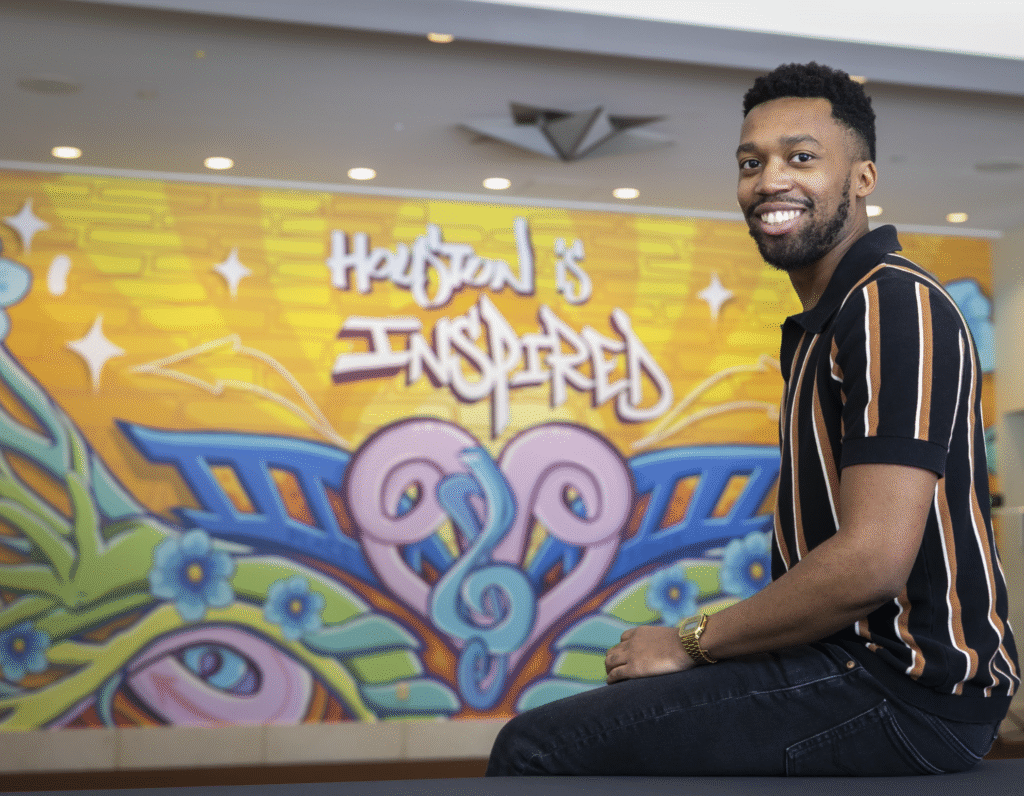
On December 4, Baker will perform the album live at the Hobby Center as part of its Houston Is Inspired series.
Baker wants the audeince to enjoy the music, but he also hopes they’ll become curious about the history behind it.
He encourages people to spend time at Emancipation Park, explore Freedmen’s Town, and learn about the Kashmere Stage Band.
Baker is already planning another album for 2027. When I asked what he wanted people to remember about his work, he didn’t mention awards, sales, or fame.
“I want it to be honest and forthright,” he said. “I don’t do it for a check. Everything I do, I put a lot of effort into.”
Although Houston will keep growing and changing, Baker hopes we’ll pay closer attention to what we’re losing along the way.
The next time we pass an empty lot, a new apartment building, or a construction site in a familiar neighborhood, maybe we’ll stop and ask the same question he does.
What was here before?
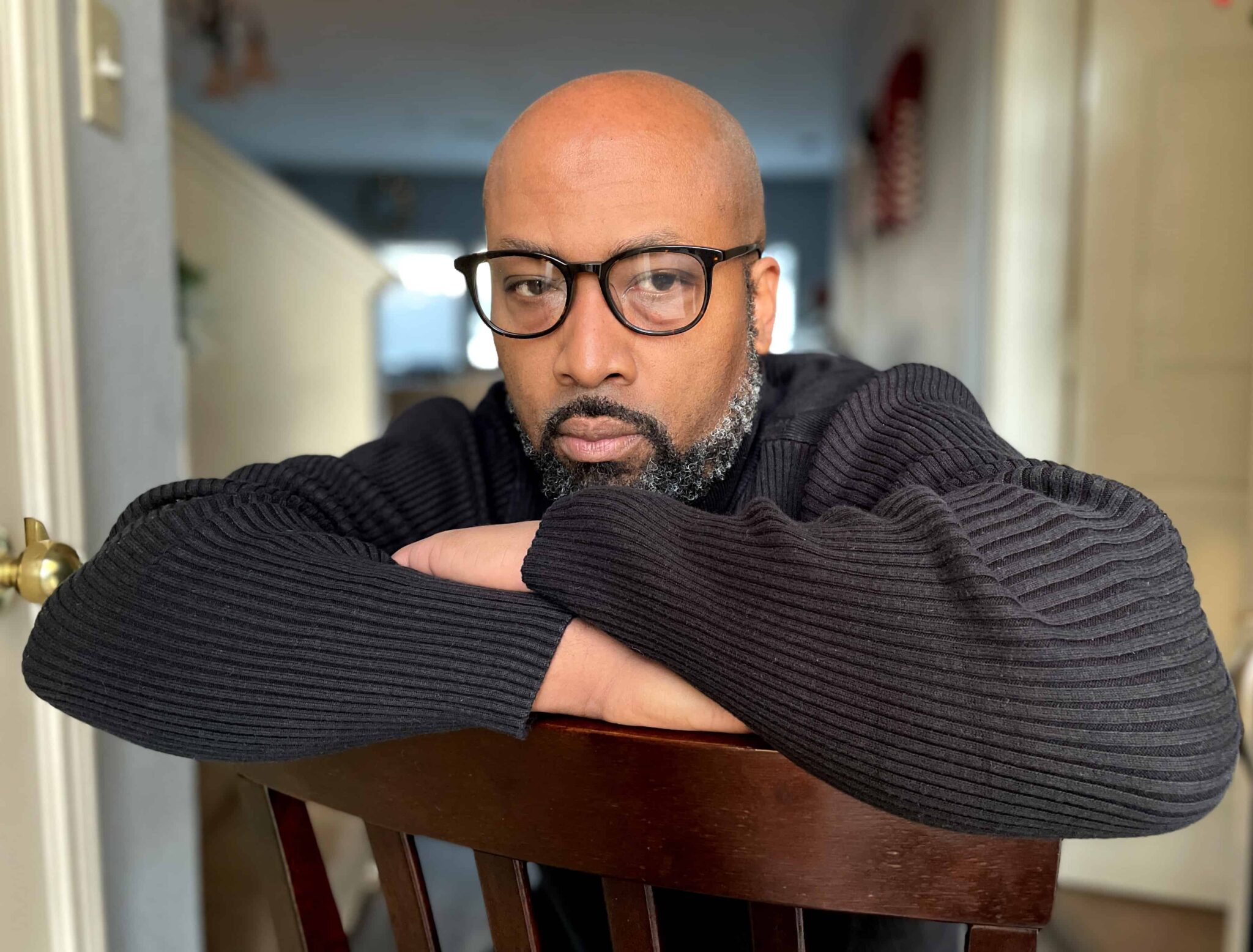
Frederick J. Goodall is the Editor-in-Chief of Mocha Man Style, media spokesperson, event host, photographer, and a top social media influencer in Houston, TX. He likes to write about fashion, cars, travel, and health.