
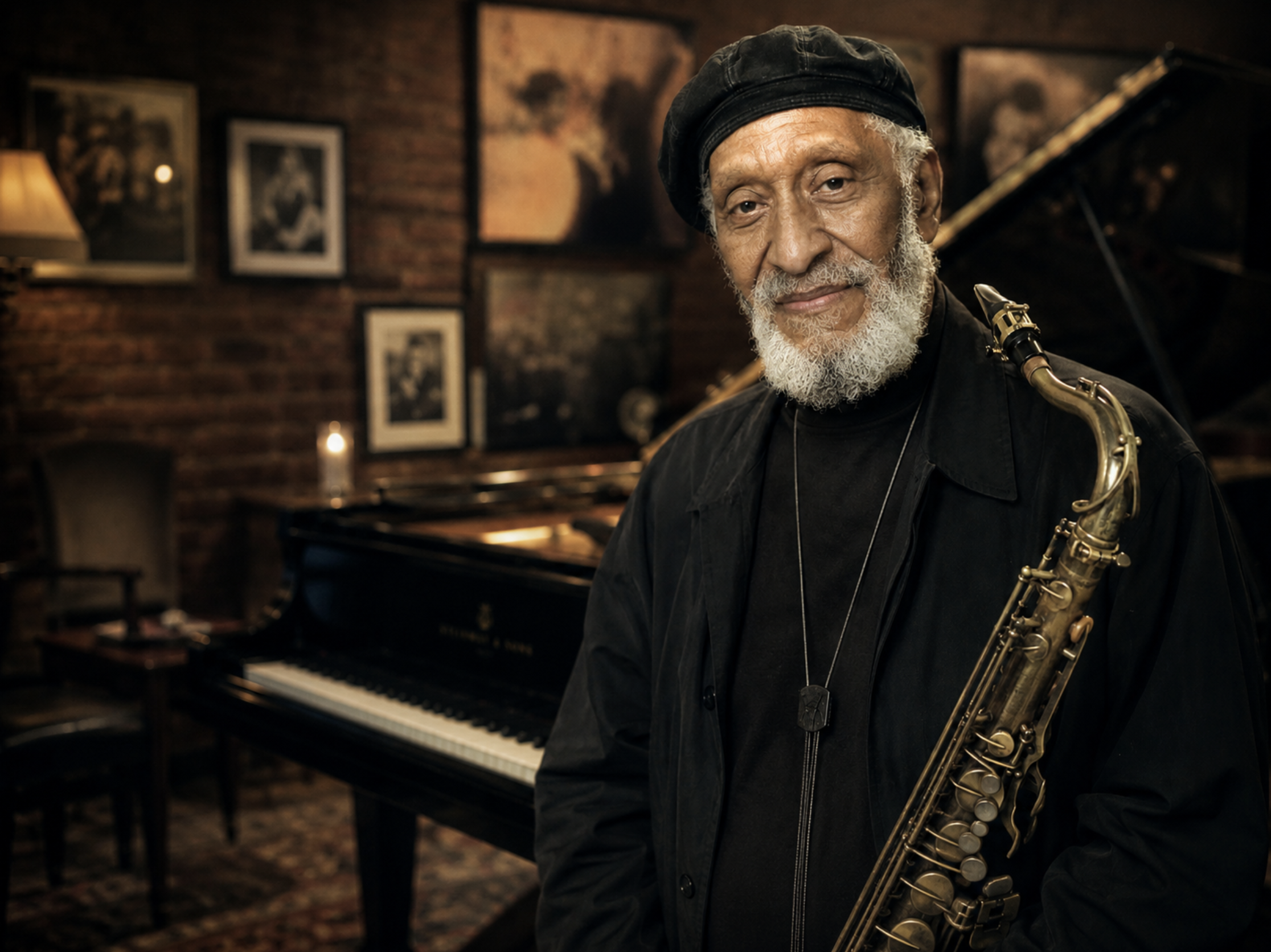
In college, I enrolled in a course called “Blacks in the Arts,” a survey of the creative output of Black Americans and its cultural impact. That class introduced me to Sonny Rollins. The first time I heard him play, I felt as if I were in a deep meditation, hearing the ancestors speak.
Rollins died on May 25, 2026, at his home in Woodstock, New York. He was 95. With his passing, jazz lost one of its last towering links to the generation that reshaped the music alongside Charlie Parker, Miles Davis, Thelonious Monk, Max Roach, and John Coltrane.
In 1956, he recorded two albums that still stand as monuments. Tenor Madness included his only documented meeting on record with John Coltrane, two of the greatest saxophonists in history sharing the same bandstand, less a performance than a summit. Saxophone Colossus, a title that referenced both his physical stature and his rapidly expanding artistic one, gave the world “St. Thomas,” a calypso-rooted composition inspired by his Caribbean heritage that became one of jazz’s most recognizable standards.
What made Rollins impossible to pin down was his refusal to stay in one lane.
Way Out West found him reimagining cowboy songs. He scored the 1966 film Alfie. He moved through bebop, hard bop, avant-garde, calypso, funk, and jazz-rock fusion with the restless curiosity of a man who saw music as a lifelong search.
In 1959, he walked away from performing and spent more than two years practicing alone on the Williamsburg Bridge, sometimes 15 hours a day. When he returned, he gave us The Bridge, another classic.
That searching spirit is why Rollins still matters beyond jazz circles. His music was built on rhythm, quotation, reinvention, and fearless improvisation, the same tools that later shaped hip-hop. He showed that Black music is not a set of separate genres. It is one long conversation, passed from horn to turntable, from bandstand to block party, from one generation of seekers to the next.
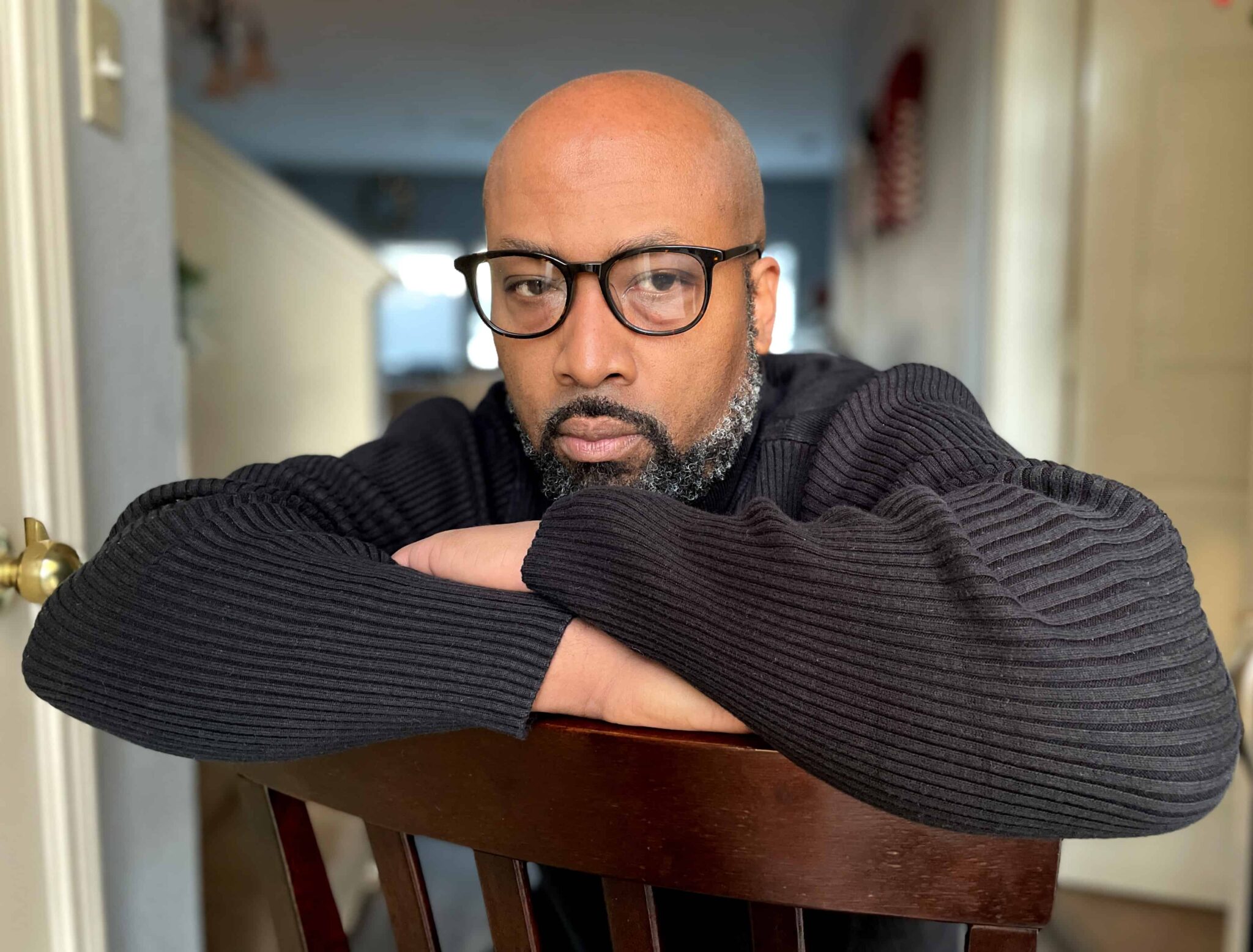
Frederick J. Goodall is the Editor-in-Chief of Mocha Man Style, media spokesperson, event host, photographer, and a top social media influencer in Houston, TX. He likes to write about fashion, cars, travel, and health.