
In Black communities, faith and art have always intersected.
Henry Ossawa Tanner’s The Annunciation is a powerful example. In the painting, Tanner brings quiet humanity to the moment Mary receives divine news. He strips away the grandeur European painters often layered onto the scene and replaces it with something intimate, humble, and emotionally true. That instinct, to locate the sacred inside ordinary life, runs through the history of Black artistic and spiritual expression.
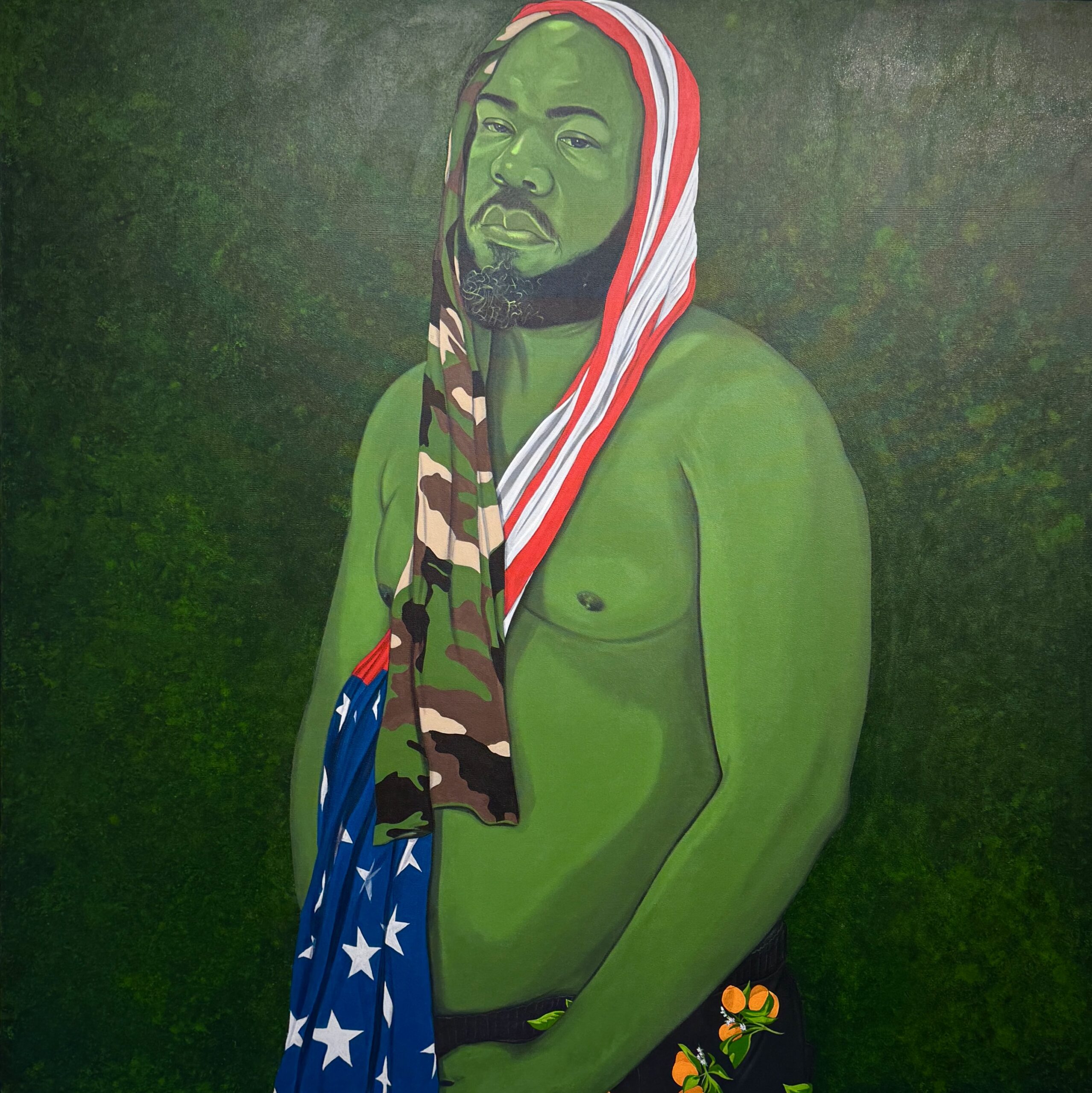
Clarence Heyward understands this inheritance. His exhibition Eden, at the Houston Museum of African American Culture, reimagines the biblical story of paradise and exile as an allegory for the African American experience. Through painting and mixed media, he explores origin, displacement, survival, and the ongoing search for belonging.
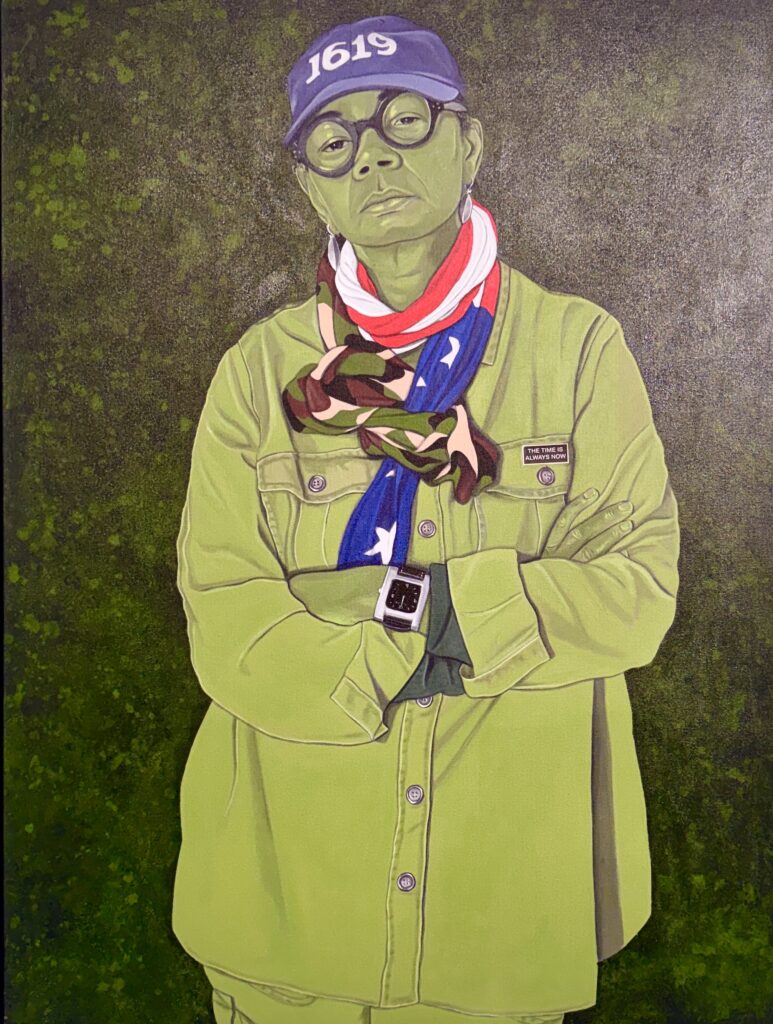
In one painting, a woman reclines on patterned fabric, partially draped in an American flag. Behind her, a blue cloth lifts to reveal a collage of historical images of Black women for Jet Magazine’s “Beauty of the Week” alongside the phrase “Black is Beautiful.” The pose recalls classical paintings of the nude female form, a long tradition of women displayed for someone else’s gaze. Heyward does not abandon that tradition. He redirects it, placing Black beauty, Black history, and American symbolism in direct and uncomfortable conversation.
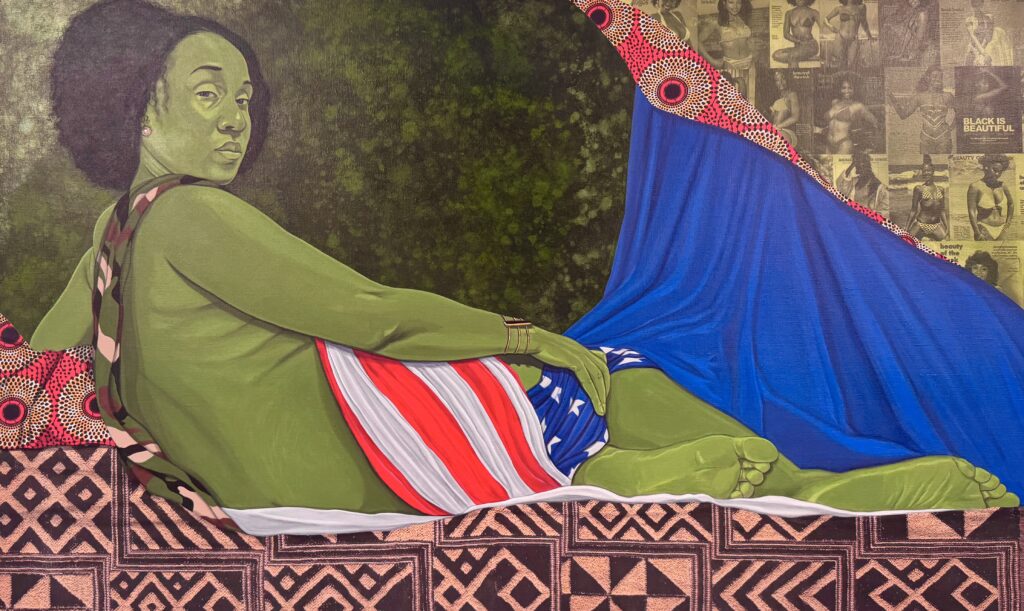
Another portrait shows a woman adjusting an American flag head wrap against a gold background. Her expression is calm, and she meets the viewer with a steady, composed gaze. The gold gives the image a devotional quality, almost like a saint. But Heyward keeps her human. She is rooted in style, attitude, and self-possession.
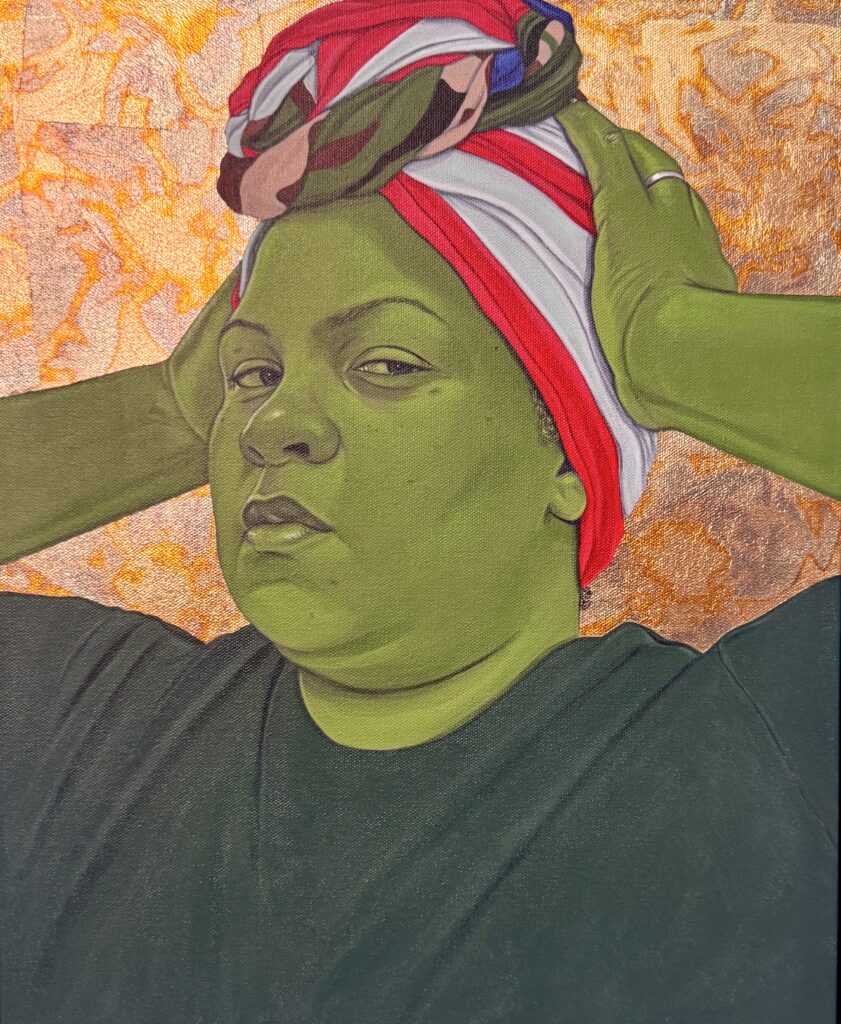
The most unsettling work, Invisible Man, shows a male figure lying low across a long horizontal canvas. His body nearly disappears into the green field surrounding him. His face, tucked near the edge of the frame, looks out with quiet intensity. The painting suggests unease and reminds me of images of Black men lying facedown with their arms behind their backs as police officers stand over them.
It also shows a vulnerability that Black men are not usually allowed to display.

Throughout Eden, Heyward showcases cultivation, care, and spiritual endurance. It is less about a paradise that was lost and more about the ongoing work of building a livable world from what remains.

Frederick J. Goodall is the Editor-in-Chief of Mocha Man Style, media spokesperson, event host, photographer, and a top social media influencer in Houston, TX. He likes to write about fashion, cars, travel, and health.