
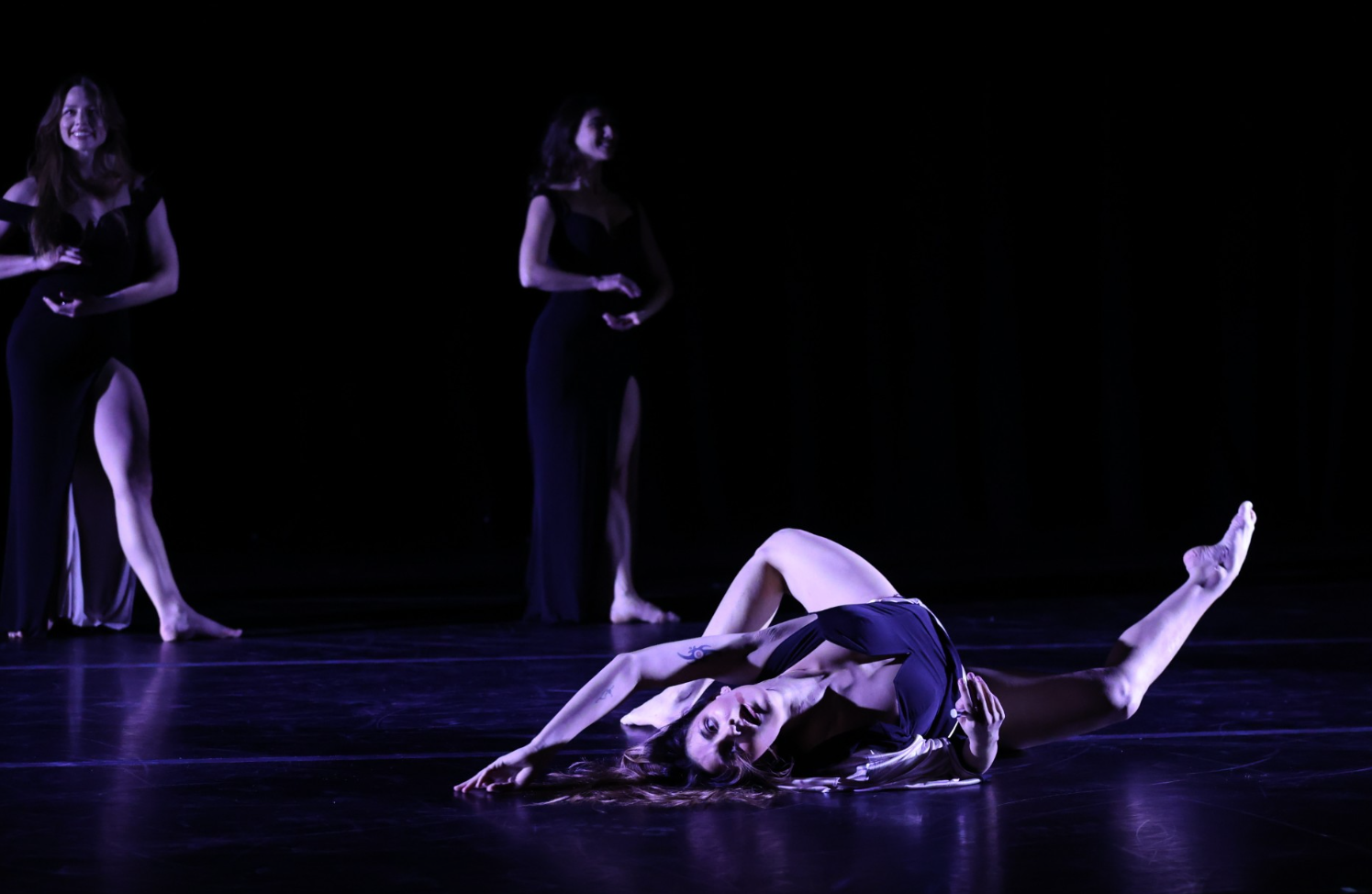
Founded by Brett Ishida, ISHIDA is a Houston-based company that continues to carve out a distinct identity, one that values atmosphere, narrative, and formal precision. Its latest program, Rara avis, balanced two international voices with two deeply personal works by Ishida herself, creating a conversation between structure and vulnerability.
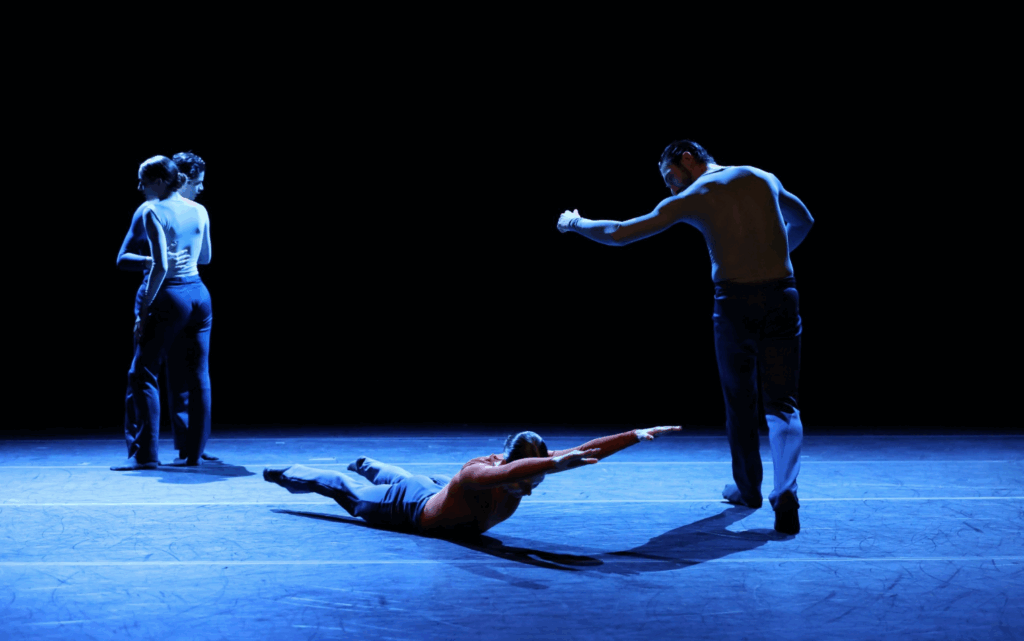
Edward Clug’s Mutual Comfort opened the evening within the lineage of European contemporary ballet, where clarity and restraint do most of the speaking. Danced by Kenedy Kallas, Nicholas Bustos, Thomas Martino, Chiara Pignataro, and Mimi Lamar, the work found its strength in the relationships it explored. The dancers moved with the ease of people who trusted one another completely. Clug has described the piece as a glass of champagne, and the metaphor holds. The choreography sparkled with effervescence, suggesting lightness while revealing the discipline required to sustain it.
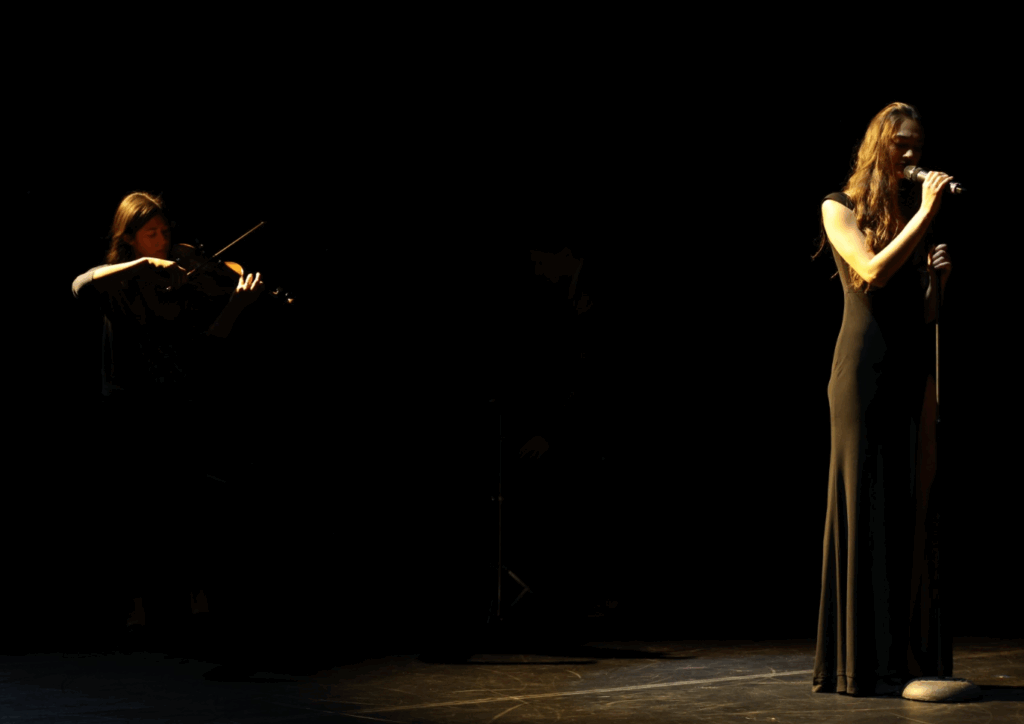
The evening’s emotional center arrived with Rara avis, a world premiere choreographed by Ishida and performed by Corah Abbott, Alice Del Frate, Renee Kester, Maddie Medina, Chiara Pignataro, and Kenedy Kallas. The work follows a singer who suffers a traumatic moment onstage and loses her confidence, then moves through a fractured interior landscape where multiple versions of herself collide.
Ishida treats music, movement, and lighting as equal narrative partners, shaping atmosphere as carefully as physical form. Rather than illustrating trauma directly, she allows it to surface through hesitation in the body, disrupted spatial patterns, and a lingering sense of emotional displacement.
The shifting score, drawing from Jóhann Jóhannsson, Alex Somers and Scott Alario, and Mina, plays a crucial role in this psychological journey. Its changes in texture and tempo prevent the piece from settling into a single emotional register, mirroring the instability of the singer’s inner world. As the music evolves, so does her physical presence, moving from guarded and tentative to increasingly grounded. By the final section, when she returns to the stage to sing with a live band, the transformation feels earned rather than symbolic. What begins in rupture resolves into control, clarity, and a quiet form of redemption.
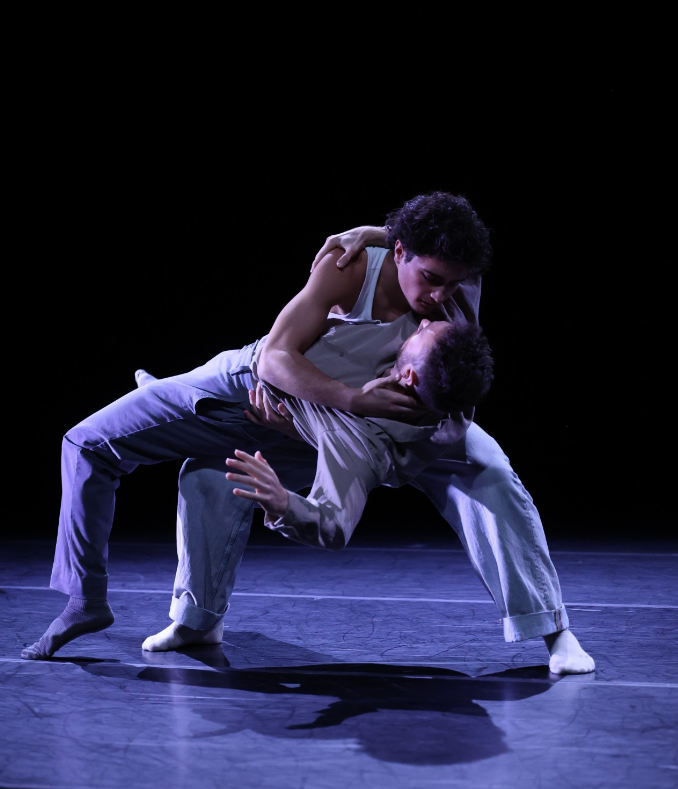
Kristian Lever’s Let’s not talk about it, another world premiere, arrived with a touch of unintended irony. Lever and Ishida spent several minutes talking about a work whose title suggests silence.
Performed by Michael Arellano, Adrien Delépine, Alice Del Frate, Renee Kester, Maddie Medina, and Jonathan Paula, the piece unfolded in a way rarely seen in dance settings. A pre-recorded script, delivered through precise lip-syncing, structured the work as a stagebound soap opera, complete with familiar dramatic turns, charged silences, and unresolved tensions among old friends gathered for dinner. The concept was bold and often witty, and the performers handled its technical demands with control.
I appreciate Ishida’s willingness to be creative and push the boundaries of dance performances. Still, the device ultimately pulled focus from what the dancers do best. The spoken narrative competed with the movement rather than deepening it. The emotional material felt strong enough to stand on its own through bodies in motion. Without the scripted dialogue, the relationships might have resonated more deeply in the physical language that dance communicates best.
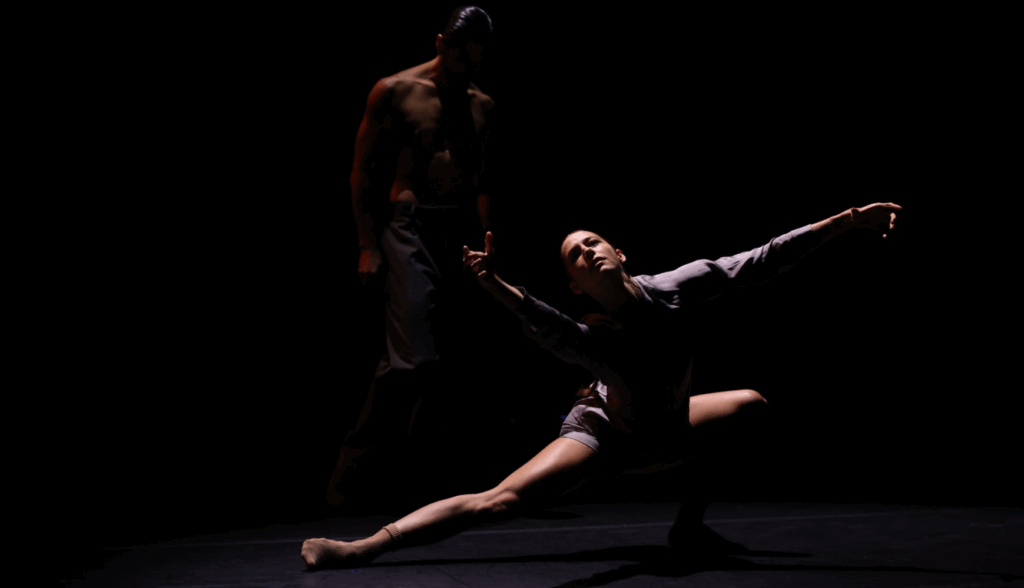
The program closed with his letter, choreographed by Ishida and performed by Nicholas Bustos, Kenedy Kallas, and Thomas Martino. Before the piece began, Ishida shared that it was inspired by a letter she received after ending a damaging relationship. She no longer remembered the words themselves, only the emotional weight they carried. That distinction shaped the choreography. The work did not attempt to reconstruct a narrative but instead traced the residue of an experience: confusion, vulnerability, and the slow recognition of harm.
Ishida has a rare ability to extract emotion from small, deliberate movements and make it accessible to an audience. A tilt of the torso, a delayed reach, a collapse that stops short of the floor carries as much meaning as any spoken confession.
Across an evening that ranged from lightness to raw psychological excavation, ISHIDA: Rara avis confirmed the company as one of Houston’s most emotionally articulate dance voices, unafraid to locate meaning in the space between movement and speech, and in what the body remembers when language fails.

Frederick J. Goodall is the Editor-in-Chief of Mocha Man Style, media spokesperson, event host, photographer, and a top social media influencer in Houston, TX. He likes to write about fashion, cars, travel, and health.