
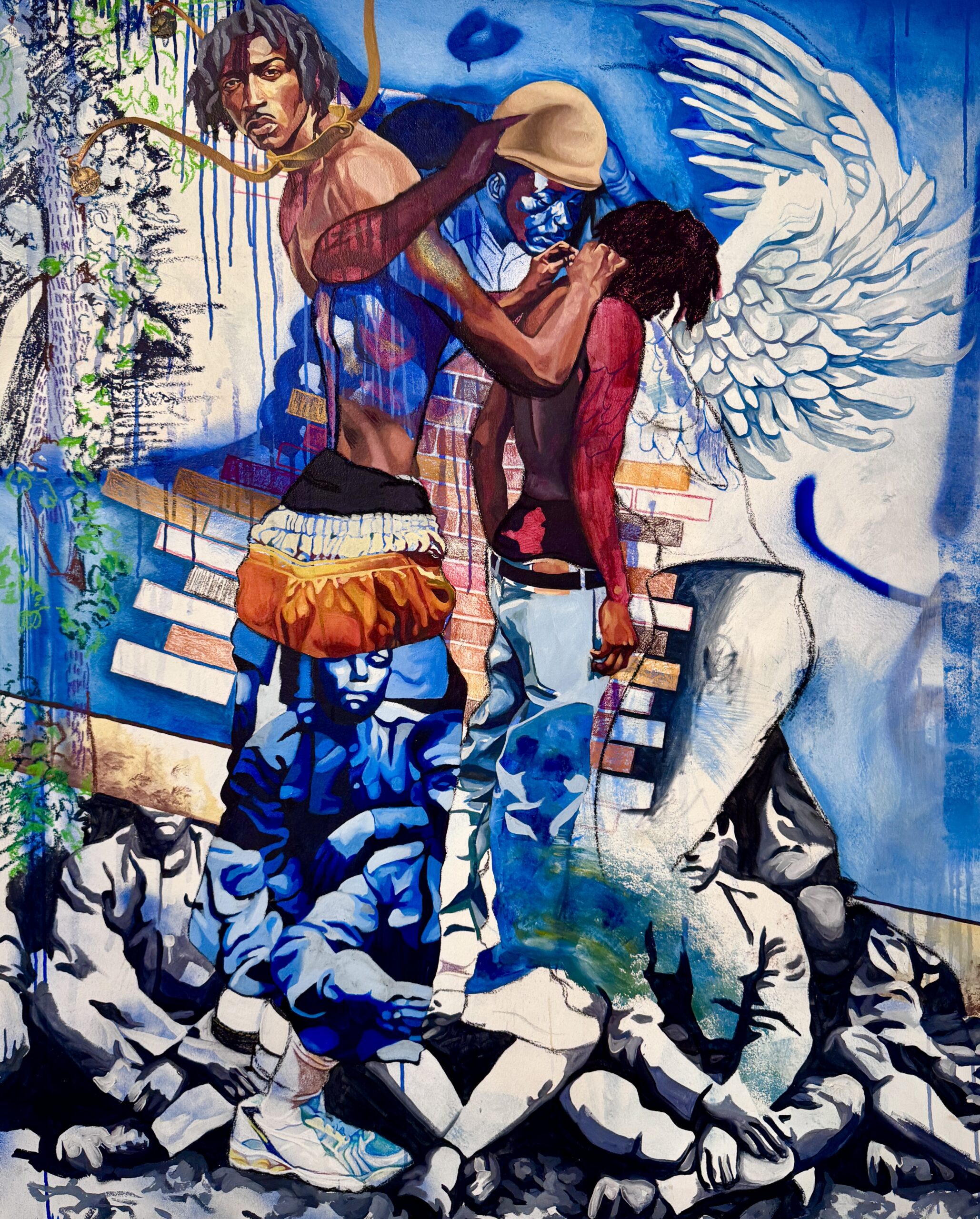
Walking into the Houston Museum of African American Culture, I was immediately drawn into the emotional gravity of Chayse Sampy’s exhibition Who Feels It, Knows It. The title, taken from a Rastafari proverb, speaks to lived experience as a form of knowledge, something you cannot learn in a book but must feel in your bones. This guiding principle weaves through every piece, making the show not just a collection of works but a meditation on memory, transformation, and the layered textures of Black life.
Several works stand out for their intimacy and power.
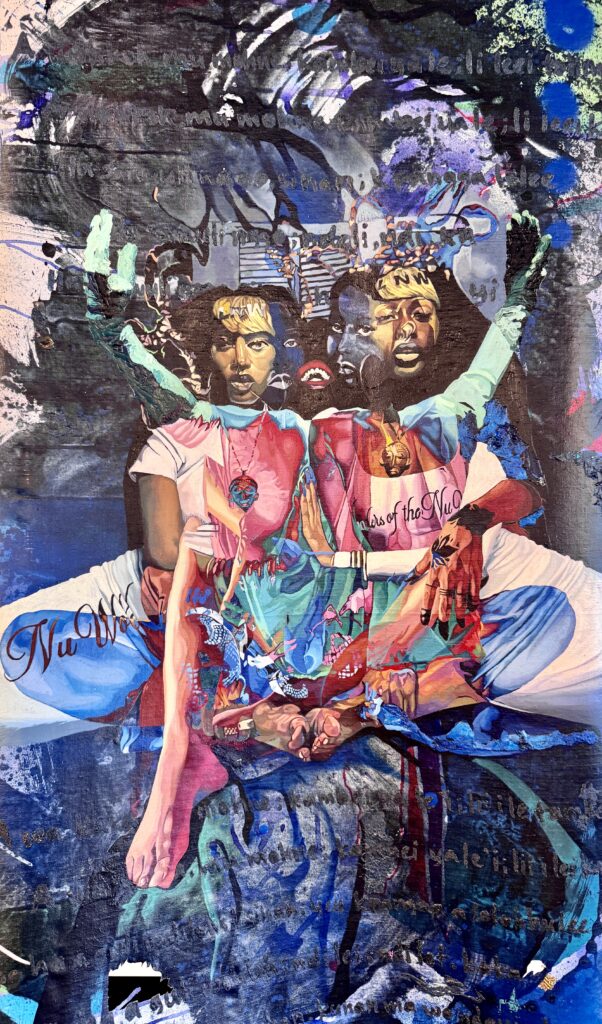
Rebirth: Sisters of the Yam draws from bell hooks and Yoruba traditions of twinship, centering on the Houston twins, Asia and Amber Mason, as embodiments of lineage and collective care.
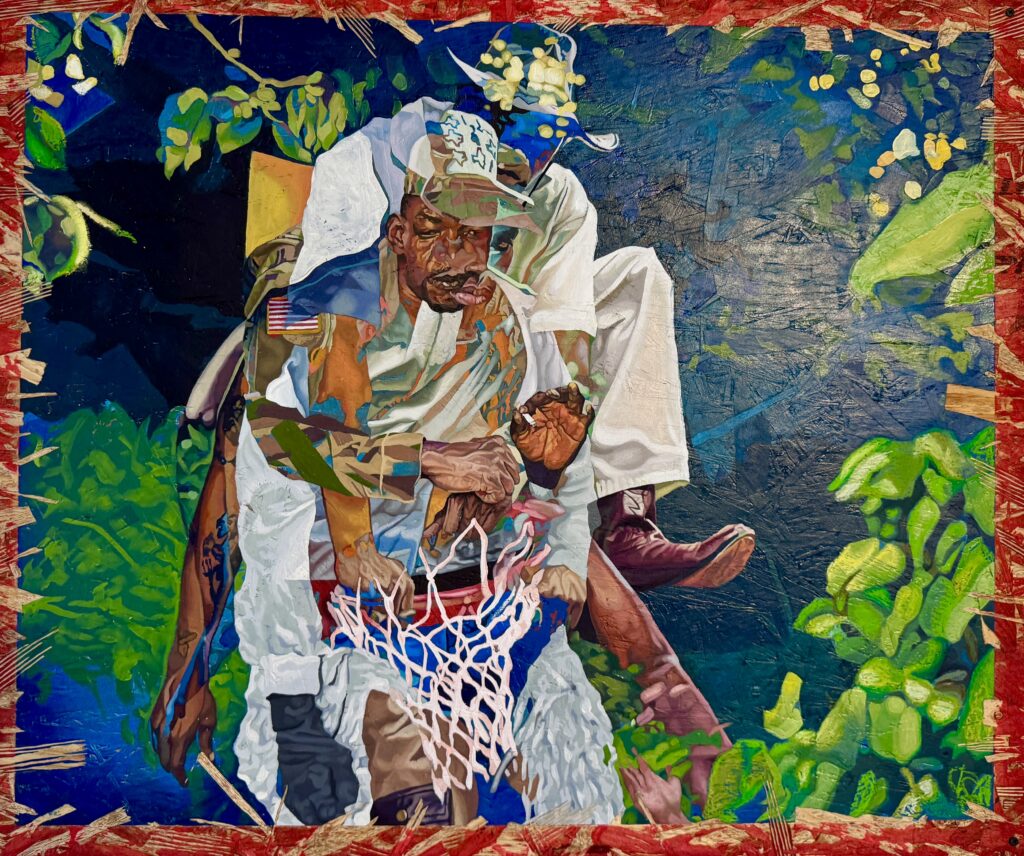
In USS Blue, patriotism is reconsidered through W.E.B. Du Bois’s “double consciousness.” A figure leaps toward a basketball hoop, suspended between triumph and defiance, framed by foliage that glows with radioactive intensity. The work honors the artist’s grandfather’s service aboard the USS Blue while questioning what loyalty has meant for Black Americans asked to serve a country that often denied them equality.
Other works fold personal and cultural histories into layered narratives.
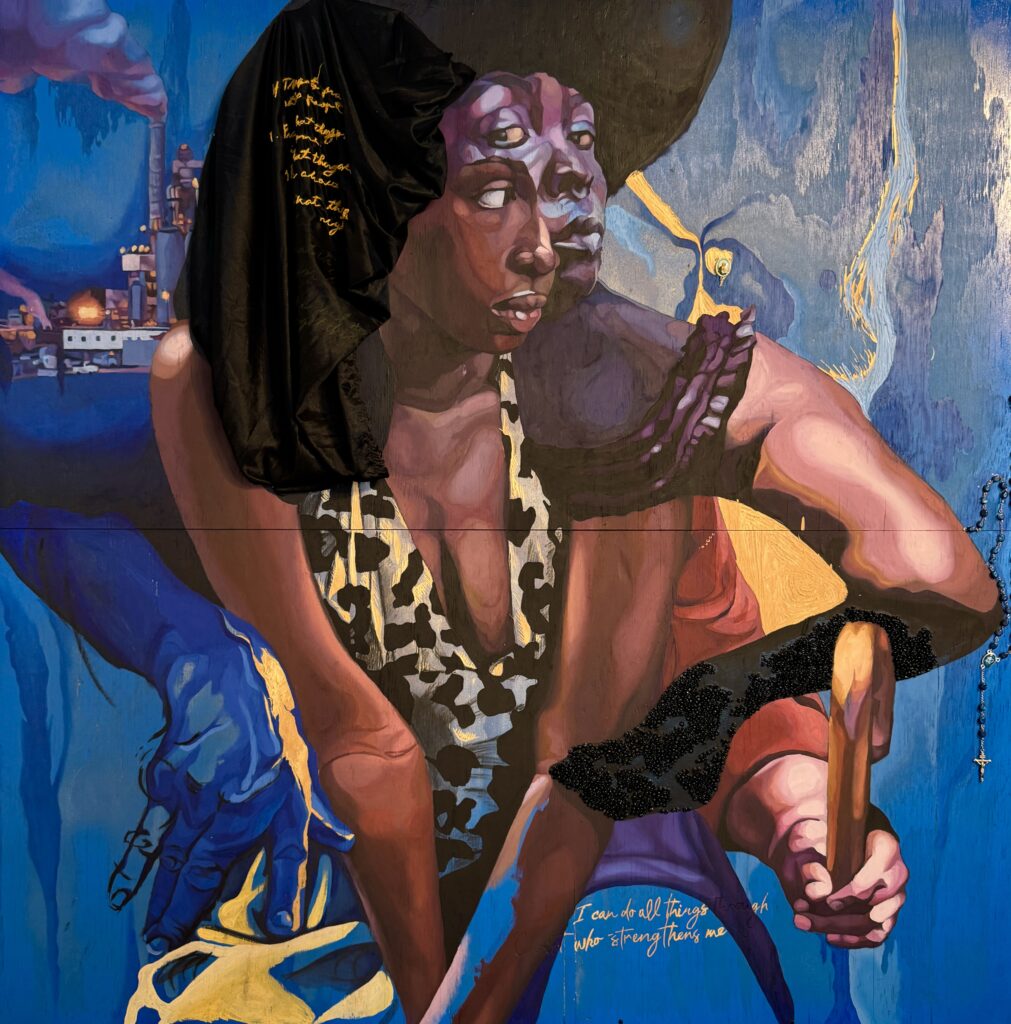
Searching for the Shade of My Grandmother’s Church Hat elevates vulnerability as a radical act.
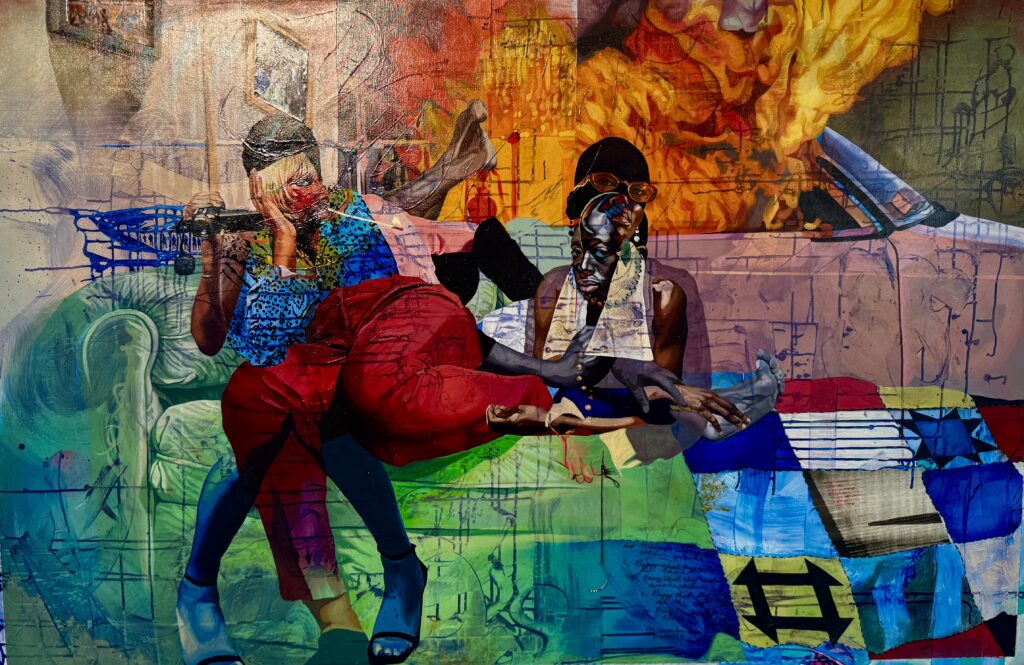
Parables of Exhale reflects on the emotional weight carried by Black women and the necessity of rest.
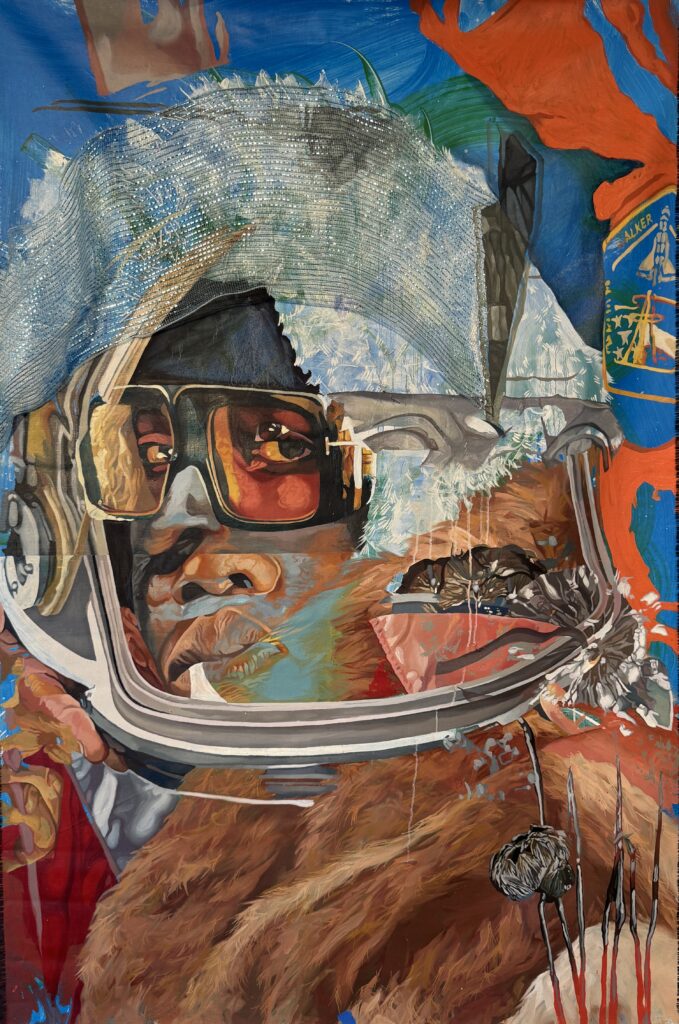
Space is the Place merges astronaut Guion Bluford and Arctic explorer Matthew Henson into a figure that collapses polar and cosmic geographies.
What I found most compelling was how Sampy reclaims and reconfigures historical wounds into acts of resilience. The materials, safety pins, embroidery floss, thrifted fabrics, and archival photographs carry their own histories of survival. In Sampy’s hands, they become vessels of both critique and beauty.
Who Feels It, Knows It is an exhibition that resists simplification and instead asks us to sit with contradiction, see beauty in fragments, and witness Black evolution.
At a moment when Black stories are being erased, Sampy’s work honors the ancestors and creates a vision for the future. And in doing so, it reaffirms what many of us already know: art can be a powerful act of healing, resistance, and love.

Frederick J. Goodall is the Editor-in-Chief of Mocha Man Style, media spokesperson, event host, photographer, and a top social media influencer in Houston, TX. He likes to write about fashion, cars, travel, and health.